
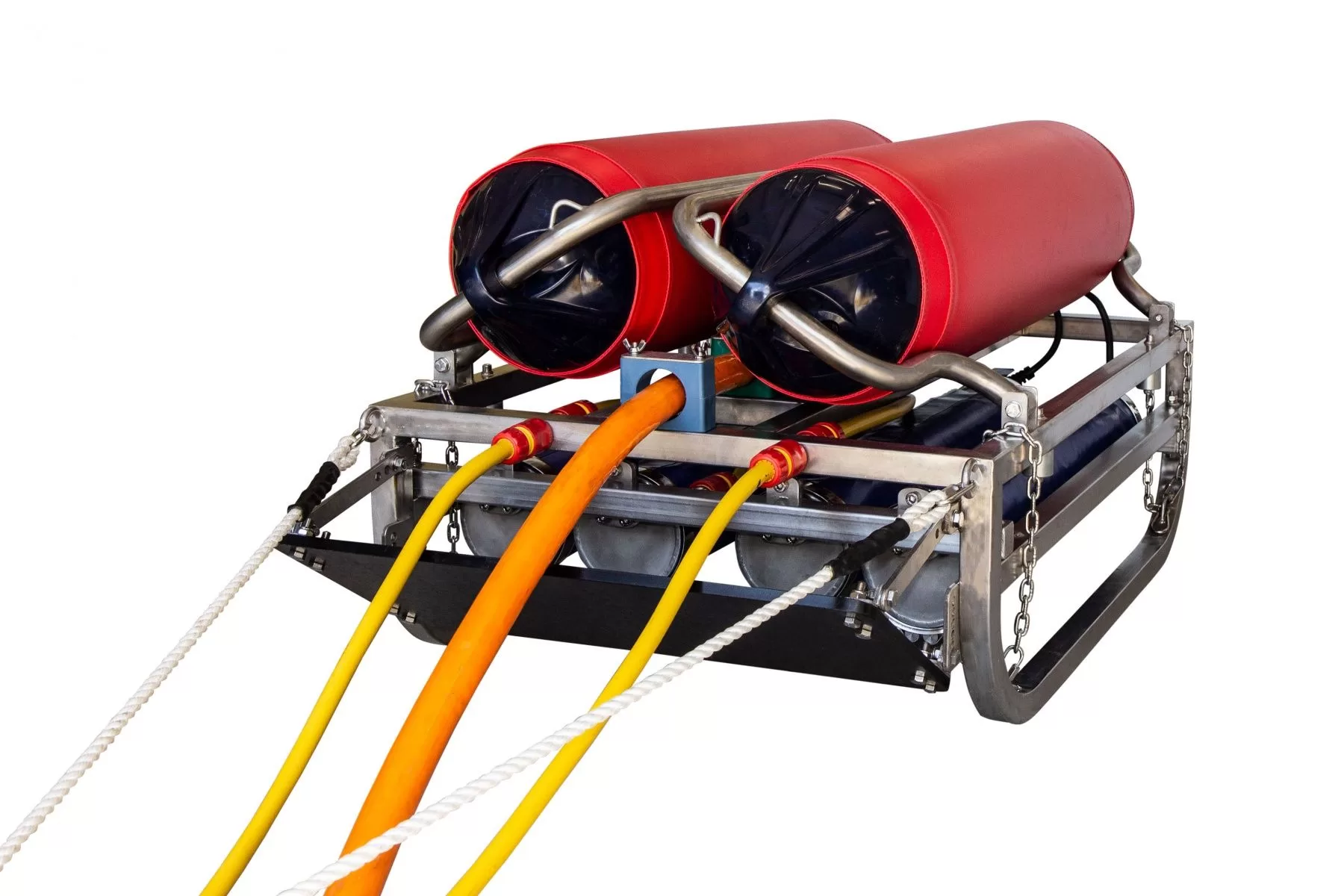
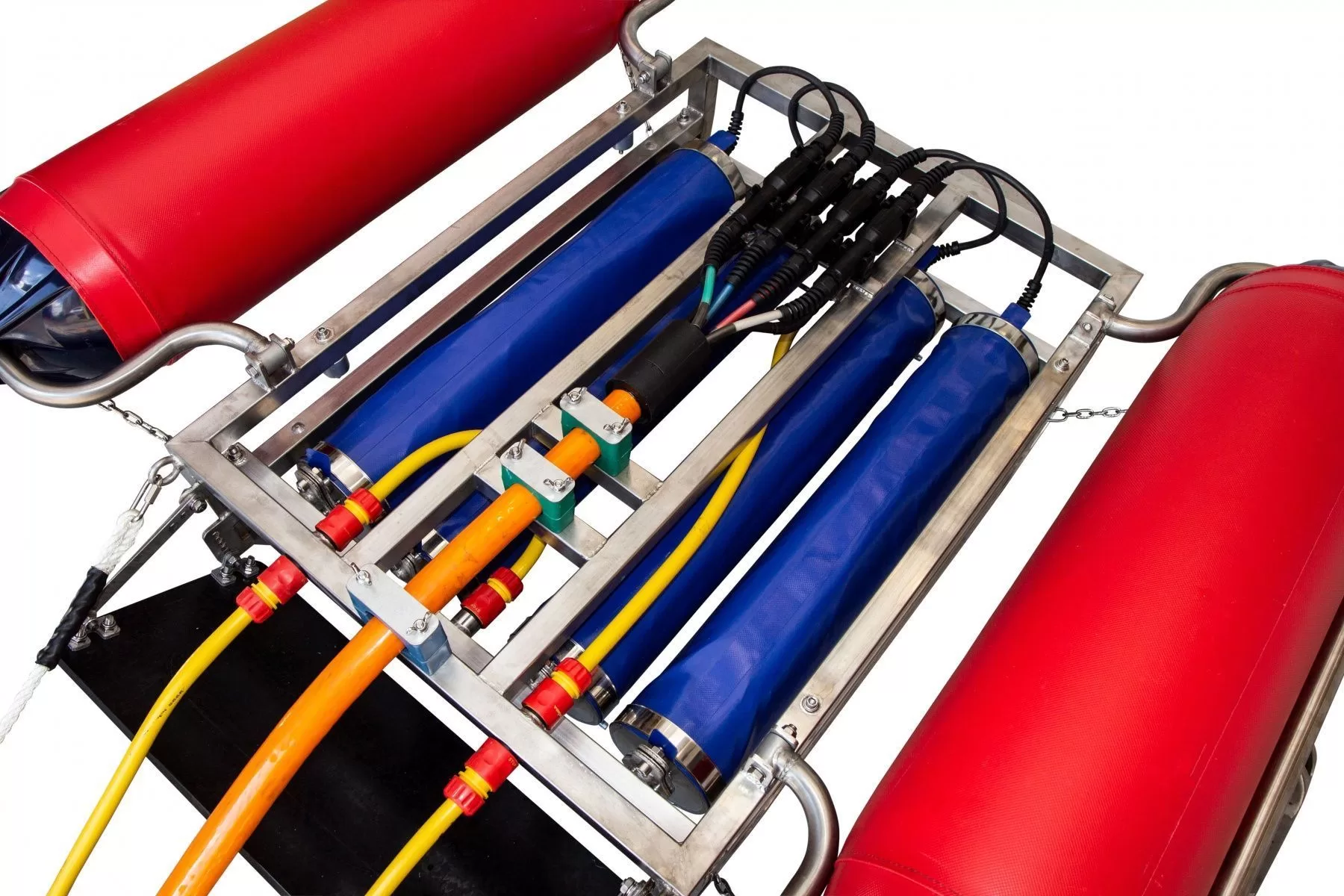
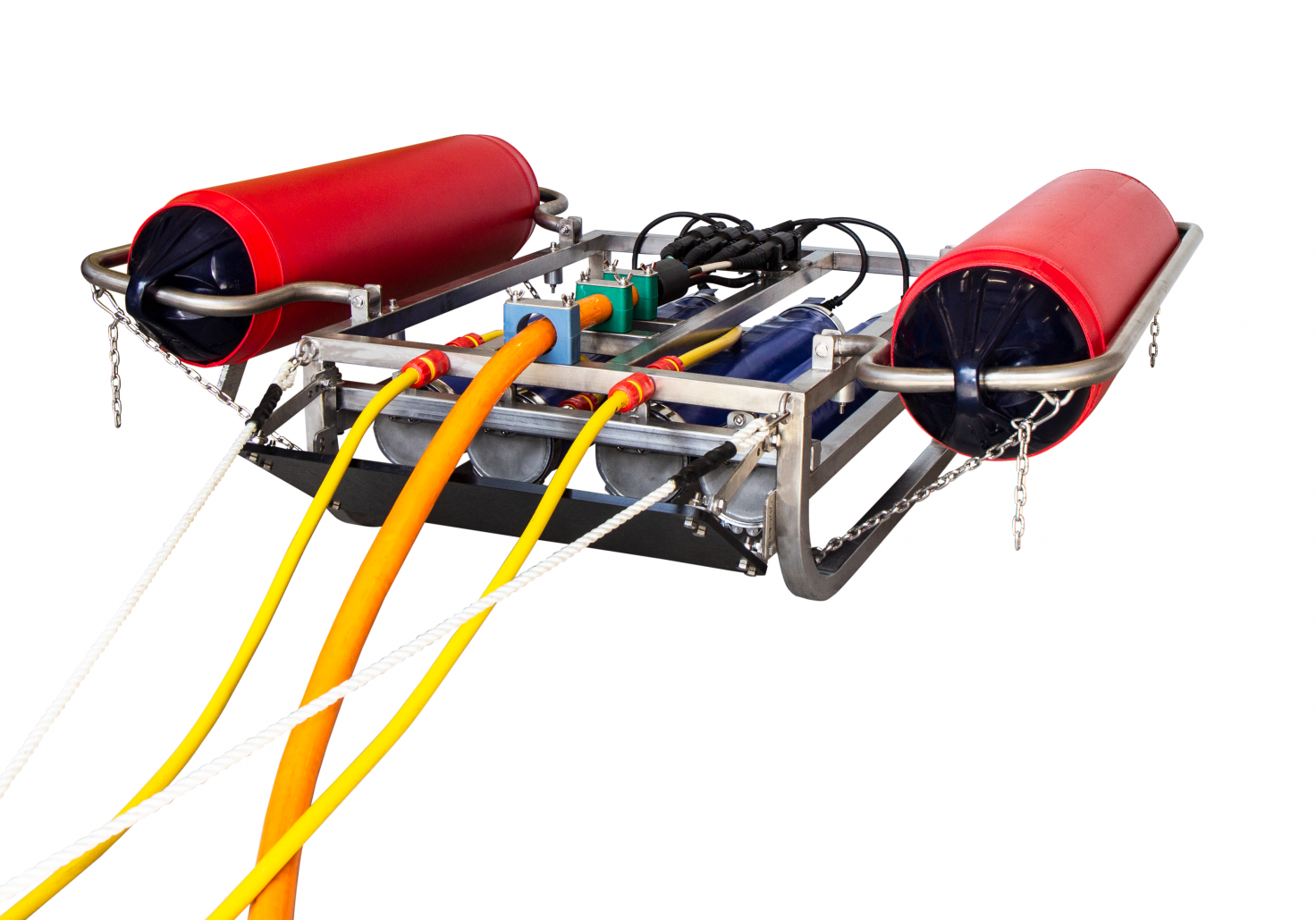
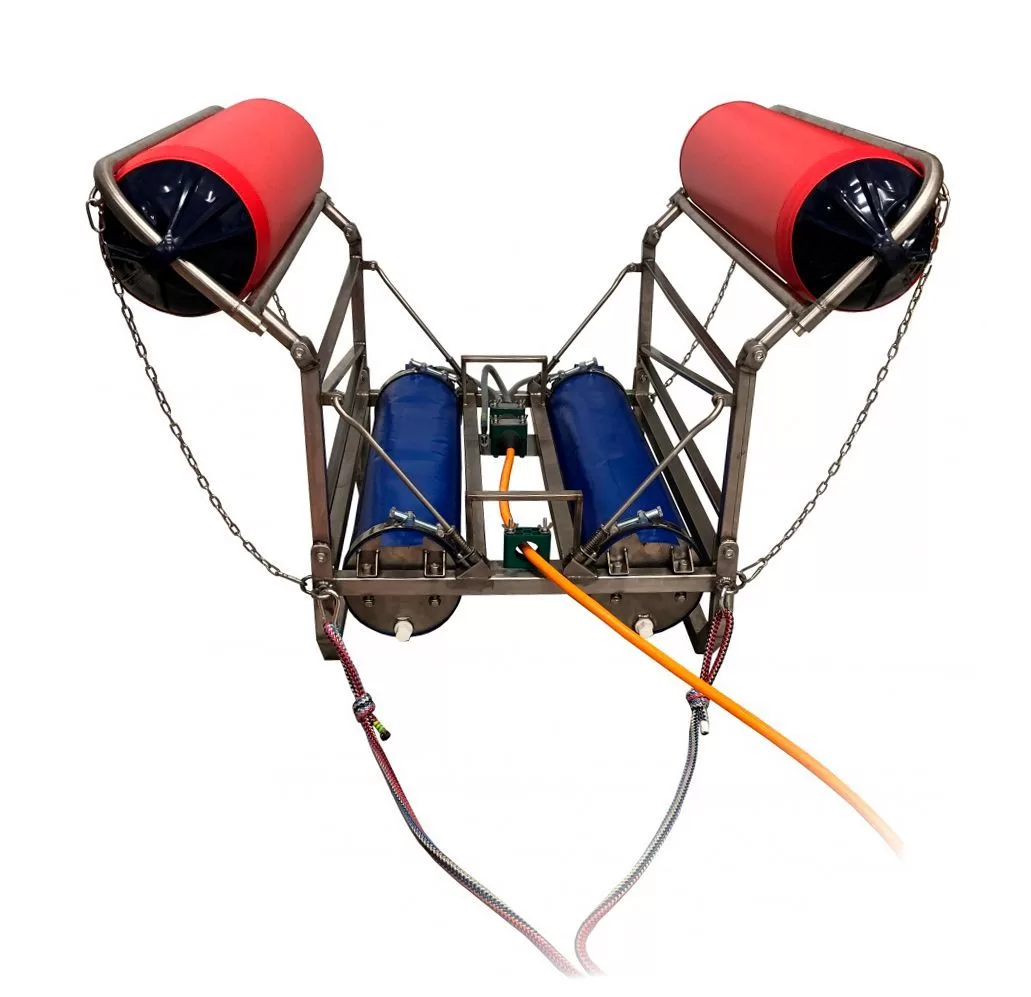
Main features:
- High repeatable broadband signal
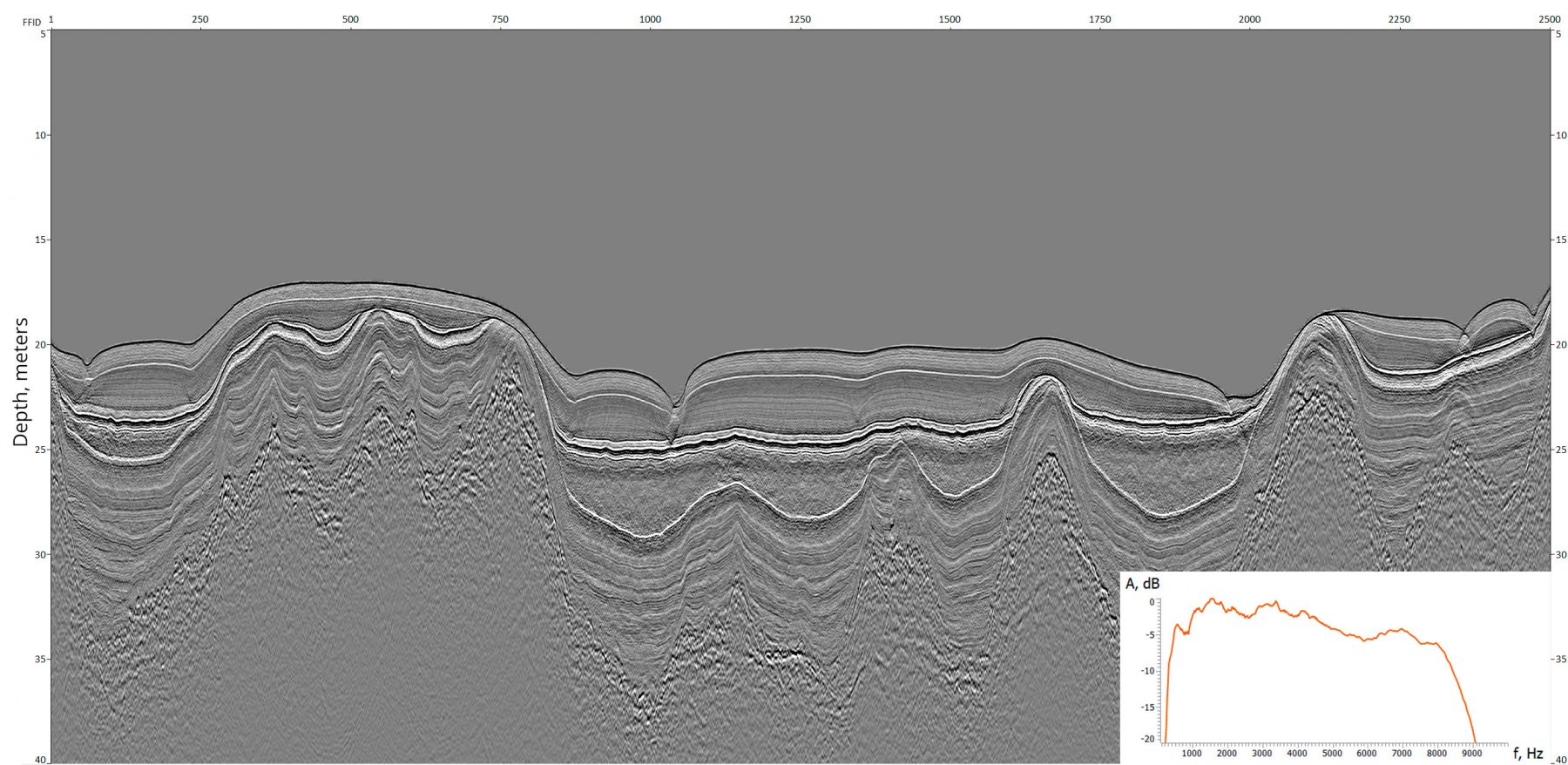
- Suitable for any type of HR/UHR surveys
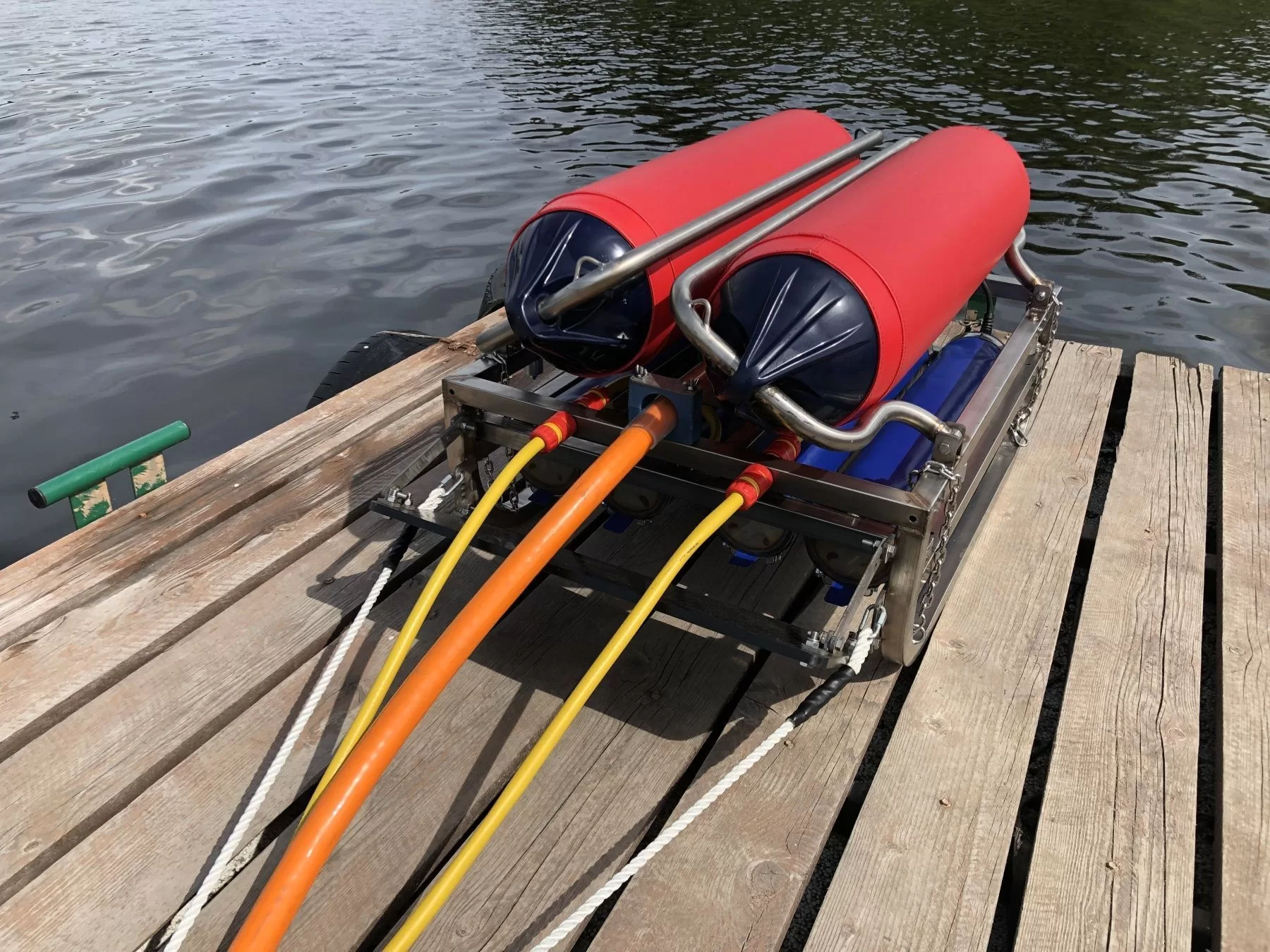
- Replaceable electrode groups
- Adjustable depth
- Stainless steel frame
Fresh water sparkers are developed for seismic reflection surveys in freshwater bodies (such as lakes and rivers) or waters with insufficient salinity.
Physical principle of sparker operation requires saltwater envinronment to perform electrical discharge and generate acoustic signal.
To operate in fresh water environmet additional salt water circulation system is required. Electrodes are covered with special hoses, connected with a salt water container. Closed circuit is performed by pumping water through the system. Circulation also removes gases generating during the shooting from the hoses
All FWS sources in our line range support industry standard 2D and 3D acquisition techniques and ensure succesfull long-term in-field operations due to:
- Broadband signal with exceptional repeatability
- Optimal towing depth with it’s easy adjustment if required
- Non-wearing electrodes due to negative discharge technology of MultiJack Energy Source
- Specific tip arrangement for optimal signal generation
- GPS installment tool for high-precision positioning
Review some of our most popular modifications:
Is the most compact and light weight sparker in our list. In combimation with MultiJack-1250 it forms a portable setup for shallow engineering purposes with penetration depth up to 50 m and vertical resoltuion up to 10 cm. FWS-125 is often used for small objects detection in soft sediments, bedrock mapping for various construction purposes, sands searches.
Key features:
- Compact and light weight
- Vertical resolution up to 10 cm
- Operational depths: 1 – 500 m
- Penetration up to 50 m
- Shot point interval: 0.6 – 1 s
- Ideally suits for small-scale operations
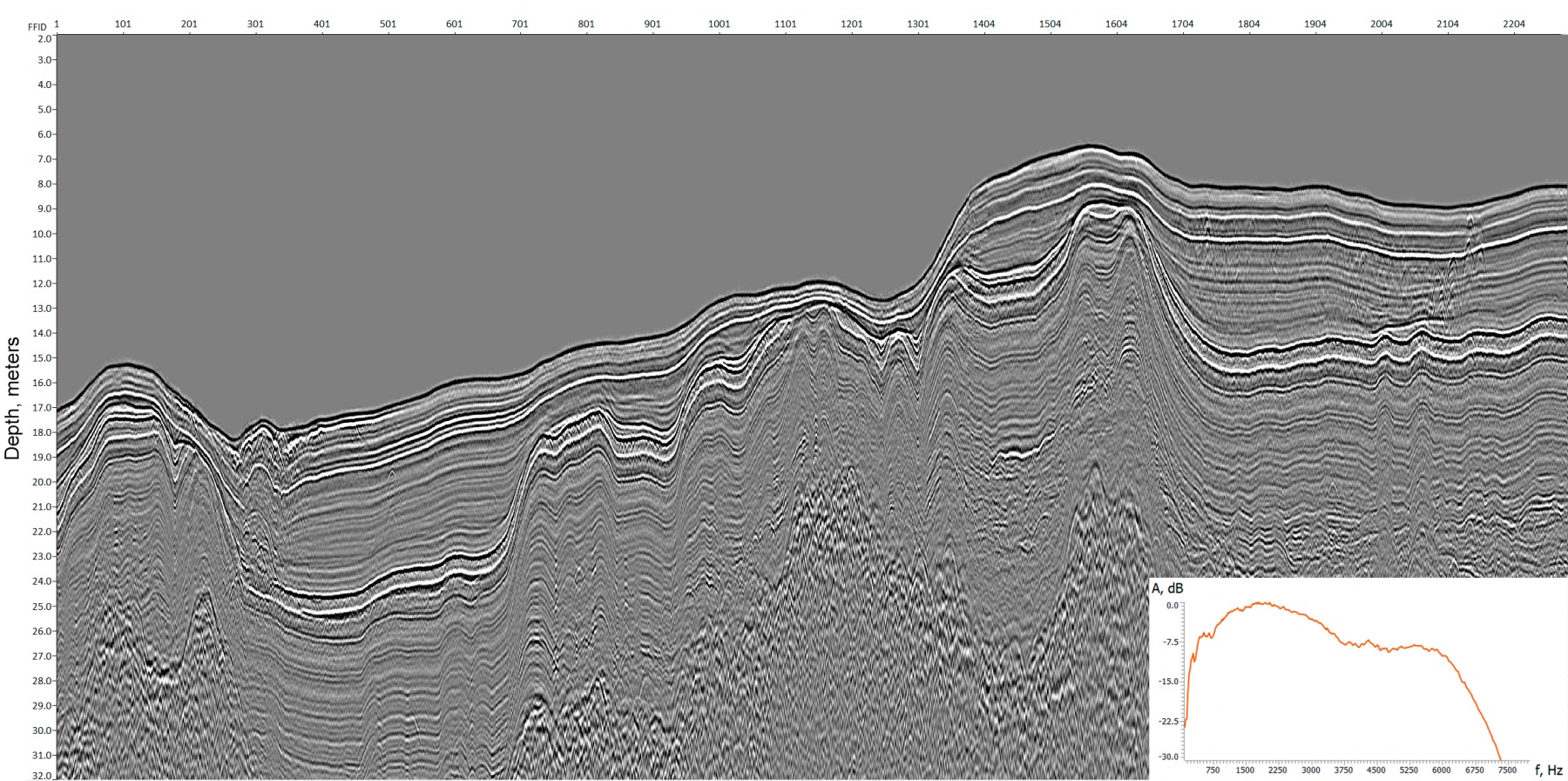
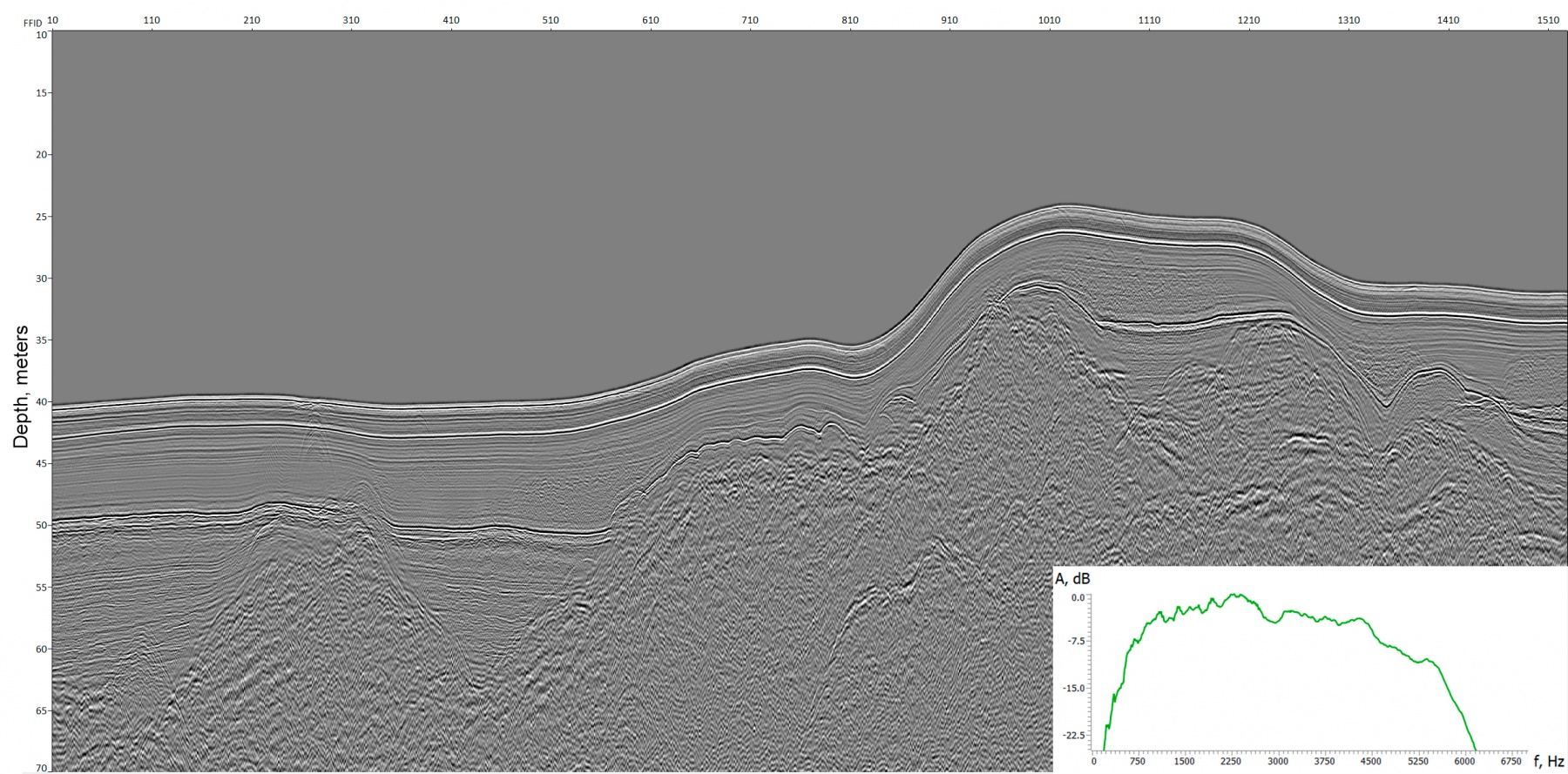
Simplicity and functionality of FWS-250 made it one of the most used sparker sources on the market. FWS-250 has 4 groups of electrodes and 252 tips in total with maximum working energy of 2500J.
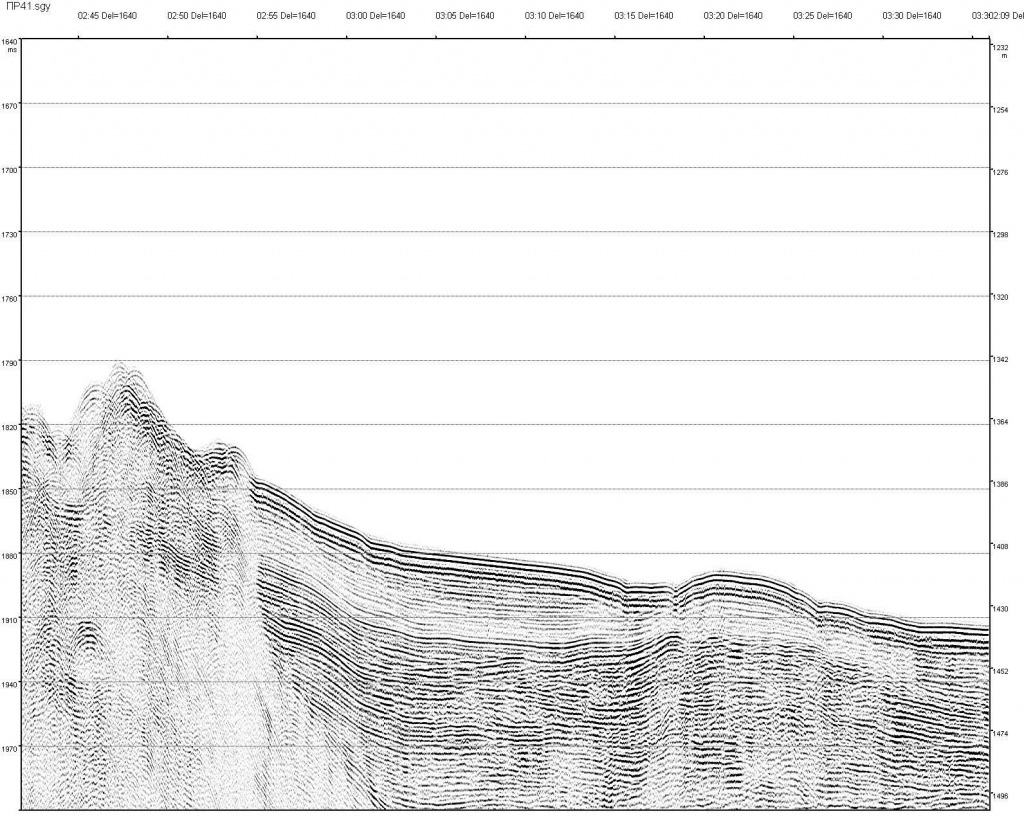
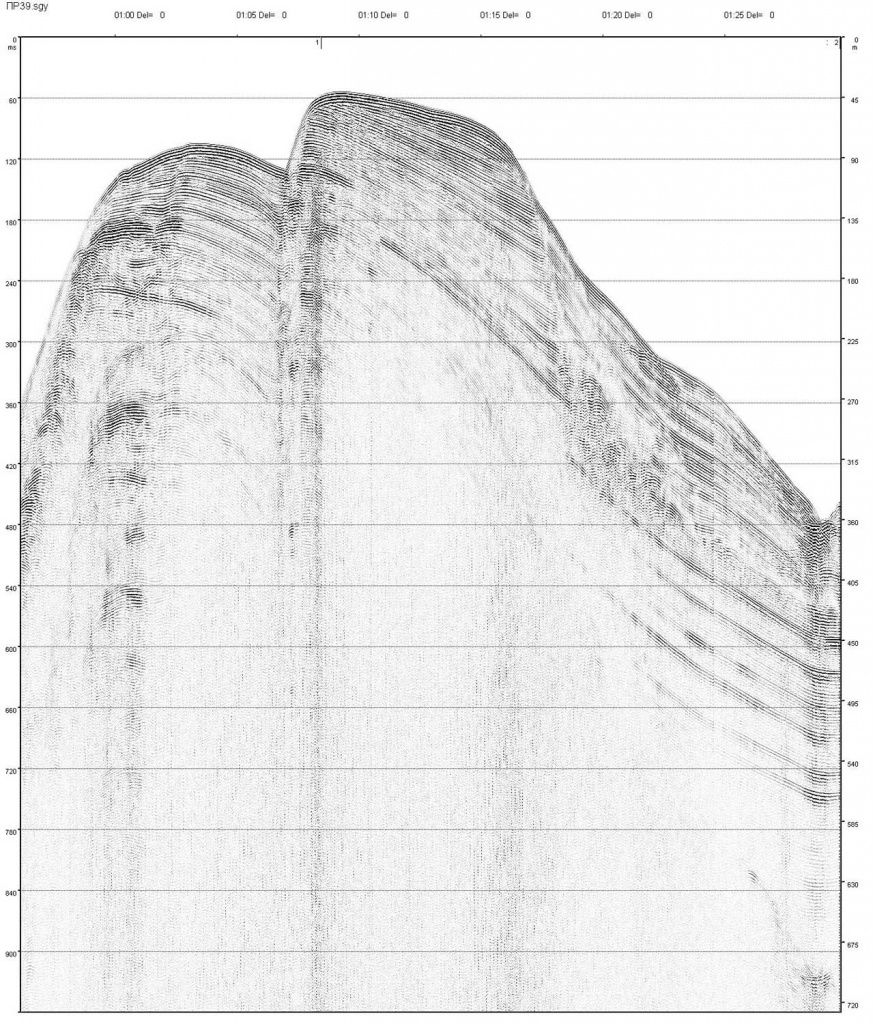
More powerfull, it can be applied on wider water depth range and projects, required deeper penetration. Among the possible applications are engineering applications, geohazard assessment, stratigraphy studies, natural resources searches and many others.
Key features:
- Wide range of applications
- Operational depths: 1- 2500 m
- Vertical resolution up to 10 cm
- Penetration up to 500 m below the seafloor
- Shot point interval: 0.6 – 1 s